Summary of Tigrinya and Amharic Typing Experience Survey
Published on March 9, 2026
Last time, we ran a survey on Tigrinya and Amharic Typing Experience. A total of 83 participants took part. The summary of the survey can be found in Summary of Tigrinya and Amharic Typing Experience Survey.
Key Takeaways from Typing Experience Survey
The data highlights a clear shift towards mobile typing, a high degree of frustration with current input methods, and a demand for advanced linguistic tools like spell and grammar checkers.
1. High Demand for Advanced Corrective Tools
The survey shows that users place extremely high value on accurate linguistic support, which they currently feel is lacking.
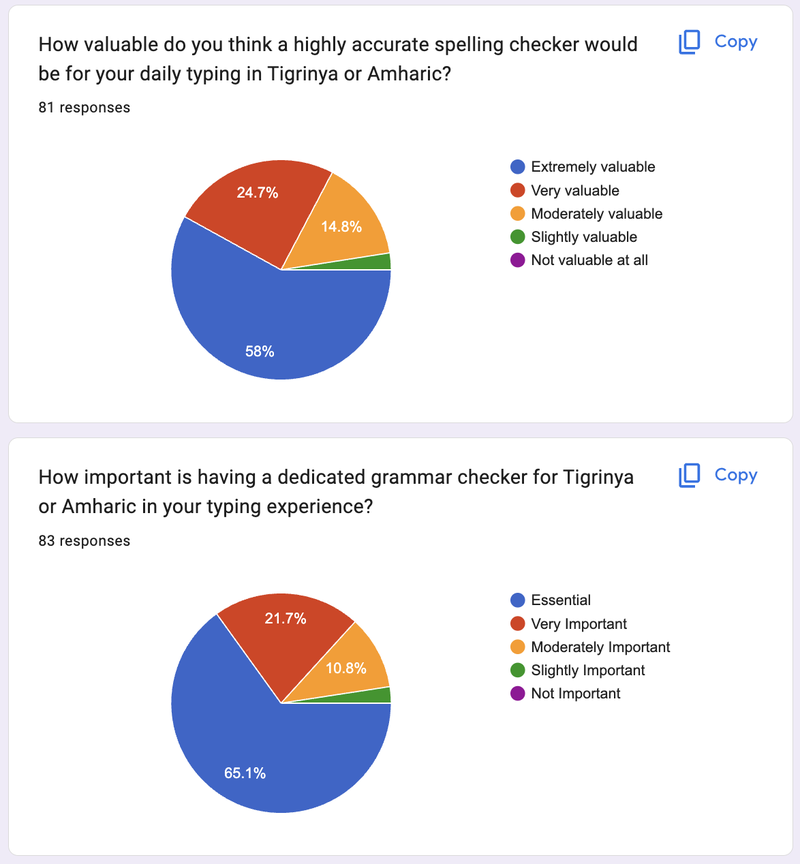
- Grammar Checker Deemed Essential: A dedicated grammar checker for Tigrinya or Amharic is rated as Essential by the highest number of respondents (65.1%).
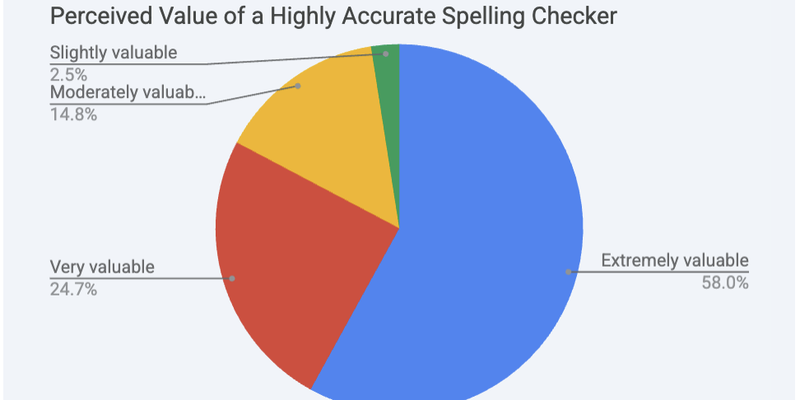
- High-Value Spell Checker: Similarly, a highly accurate spelling checker is considered Extremely valuable by 58.0% of respondents.
- Perceived Lack of Functionality: The top frustration cited by users is the "Lack of accurate spell checking/autocorrection," which affects 63.9% of all respondents, indicating a critical gap in existing tools.
- Core Typing Difficulties Hinder Productivity
Beyond corrective tools, users face significant challenges in the fundamental act of input, suggesting existing keyboard layouts or methods are inefficient.
- Difficulty Finding Characters: The second most common frustration is "Difficulty finding the correct characters/syllables quickly," reported by 61.4% of respondents. This points to complexity in the Ge'ez script layouts, whether Ethiopic or phonetic.
- Specific Input Gaps: A high percentage of users (45.8%) also struggle with "Typing specialized punctuation or numerals," suggesting that current keyboards do not easily expose these characters.
- Workflow Friction: A substantial portion (44.6%) report "Switching between languages/keyboards is cumbersome," which suggests multi-lingual users are poorly supported in their workflow.
3. Mobile Dominance and its Implications
The survey indicates that the mobile experience is paramount, which must be considered for future tool development.
- Smartphone is the Primary Device: The vast majority of respondents (72.3%) state they most frequently type in these languages on a Smartphone (Android/iOS), compared to 27.7% on a Desktop/Laptop Computer.
- The Mobile Challenge: Given that the top difficulties are related to character finding and cumbersome switching, any solution must prioritize an intuitive and efficient mobile keyboard interface.
- Language Use: The languages typed are split, with Both Tigrinya and Amharic being the primary choice for 50.6% of respondents, further emphasizing the need for easy language-switching functionality.